
Some unusual trees

One of my favorite pastimes is exploring old bookstores. A few months ago, I spotted a complete set of the Encyclopaedia Britannica, 15th edition, published in 1975, but that particular set was too expensive for me. A couple of weeks ago, however, I found a good deal in an another bookstore and bought it. What an experience it has been so far. There is so much in those heavy volumes that I do not know. Recently, I was reading about cosmology when, in the same volume, an entry on trees piqued my interest. I was pleasantly surprised to learn about some unusual trees and thought I should share them though it’s a bit different from what I usually write about.
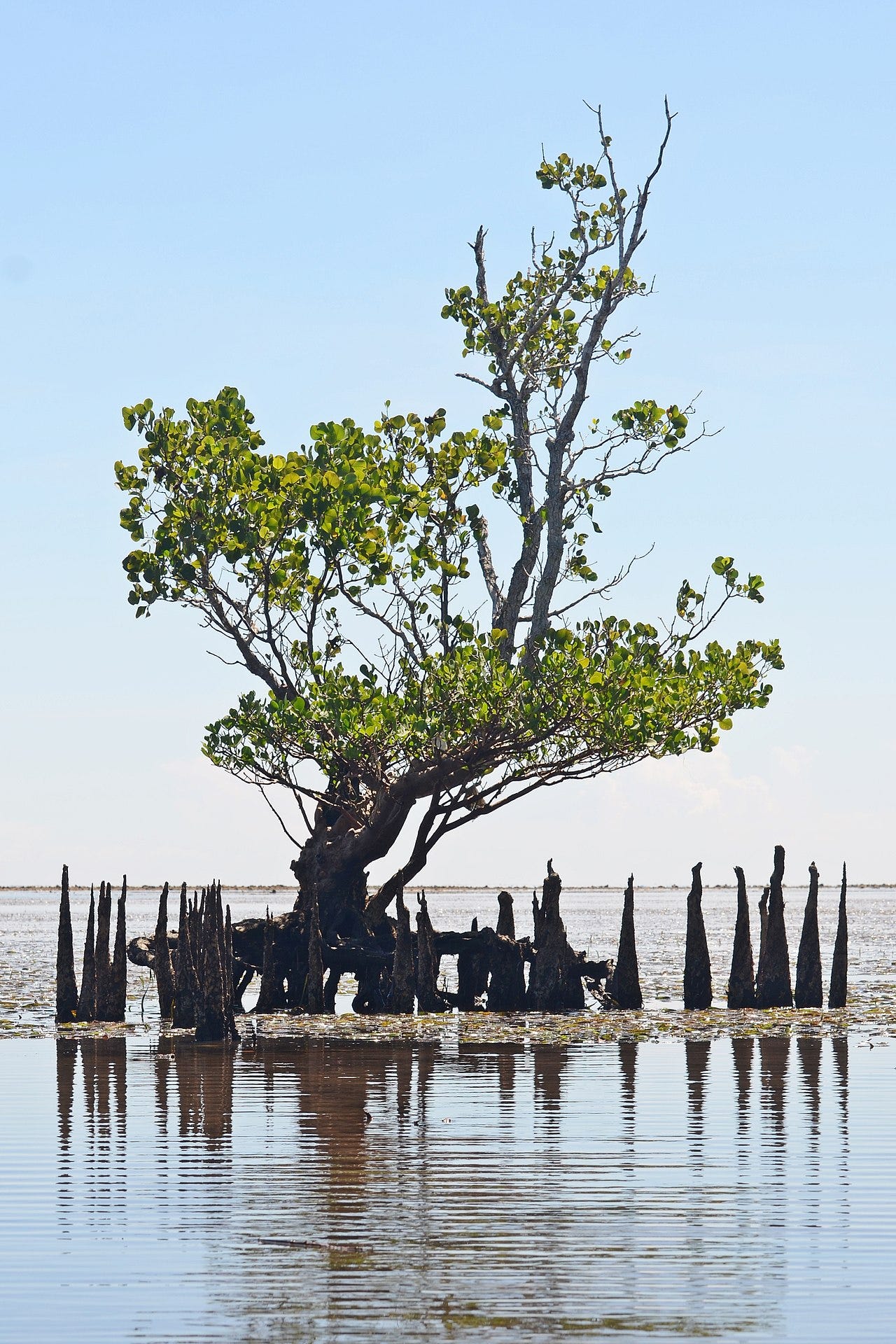
Let’s start with mangroves, found in coastal areas and along riverbanks. Mangroves are unusual and a bit counterintuitive: they spread seaward while also helping defend the land behind them. These trees serve as vital defenses against coastal damage.
.JPG)
Their seeds grow into seedlings and when these seedlings fall, they either become fixed in the mud or float away to another site.
A banyan can look like a whole forest even though it is one tree. Roots drop from its branches, take hold in the ground, and grow into new supports like trunks.
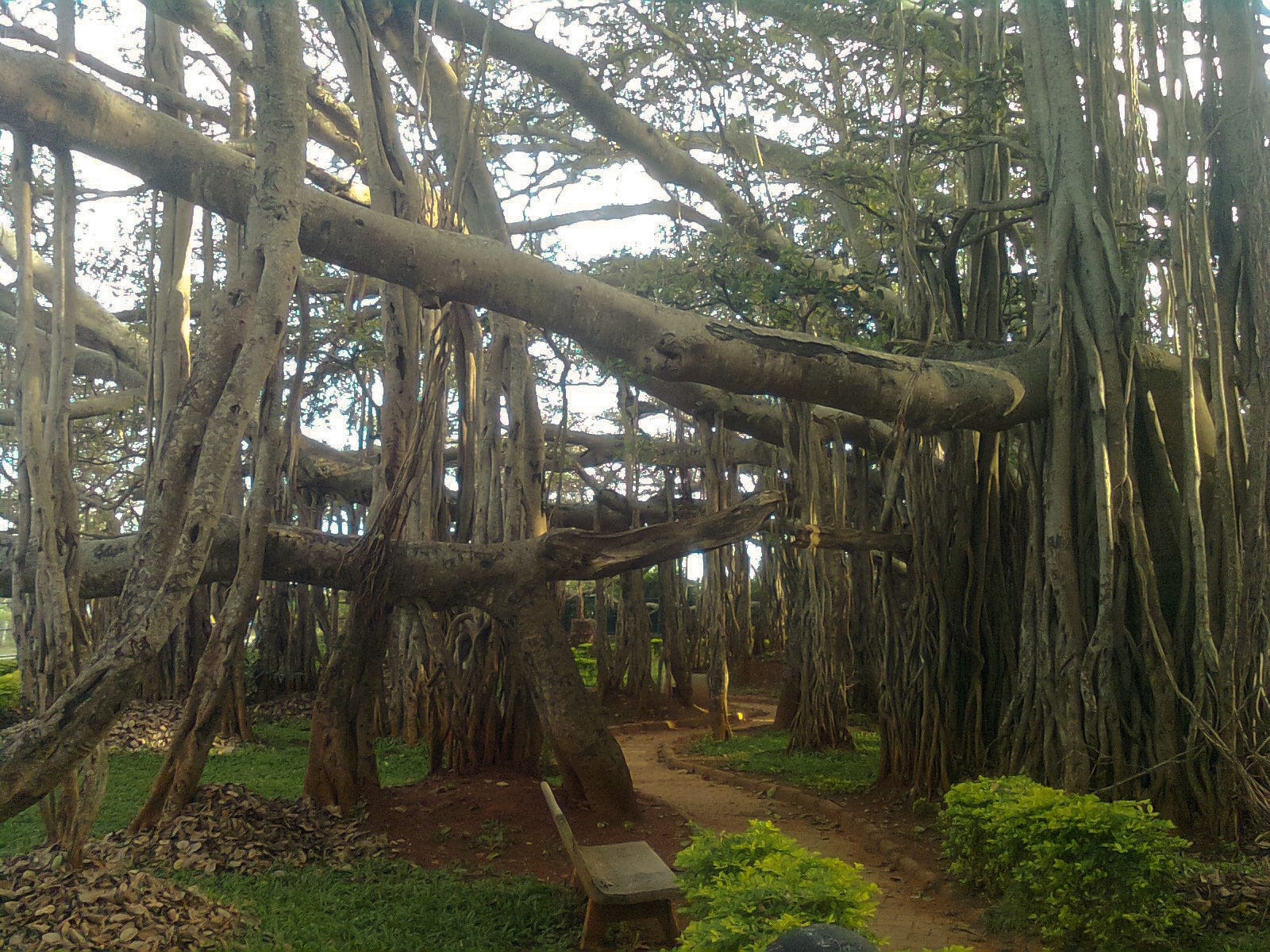

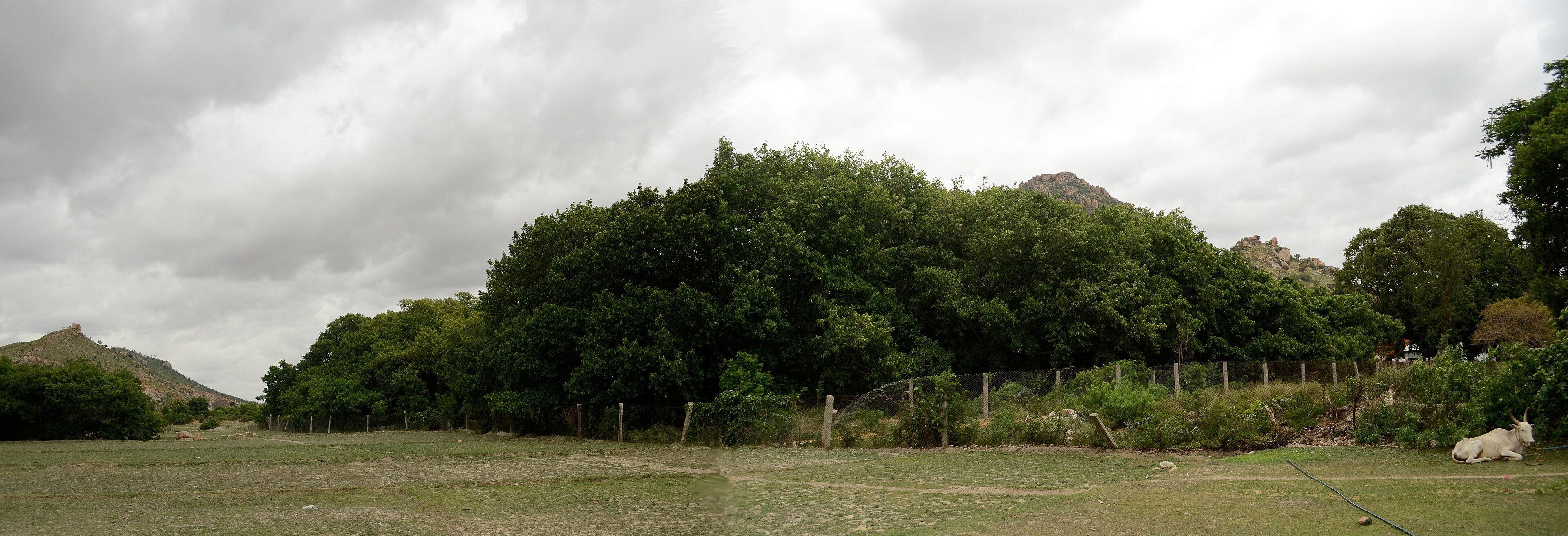
I was surprised to learn that one such tree, with a circumference of 2,000 feet has been estimated as being capable of sheltering 20,000 people. That is a massive amount of shade. India has several giant banyans. Thimmamma Marrimanu in Andhra Pradesh currently holds the Guinness canopy record at about 5.41 acres (an area equivalent to three soccer fields); The Great Banyan in Kolkata is another famous specimen at about 4 acres. A tree covering this much area went completely against what I would expect from a tree.

The ombú is tree-like in size, but so swollen and massive in form that it feels almost architectural. The ombú tree attains heights of 60 feet and a spread of 100 feet and it has a wide trunk.
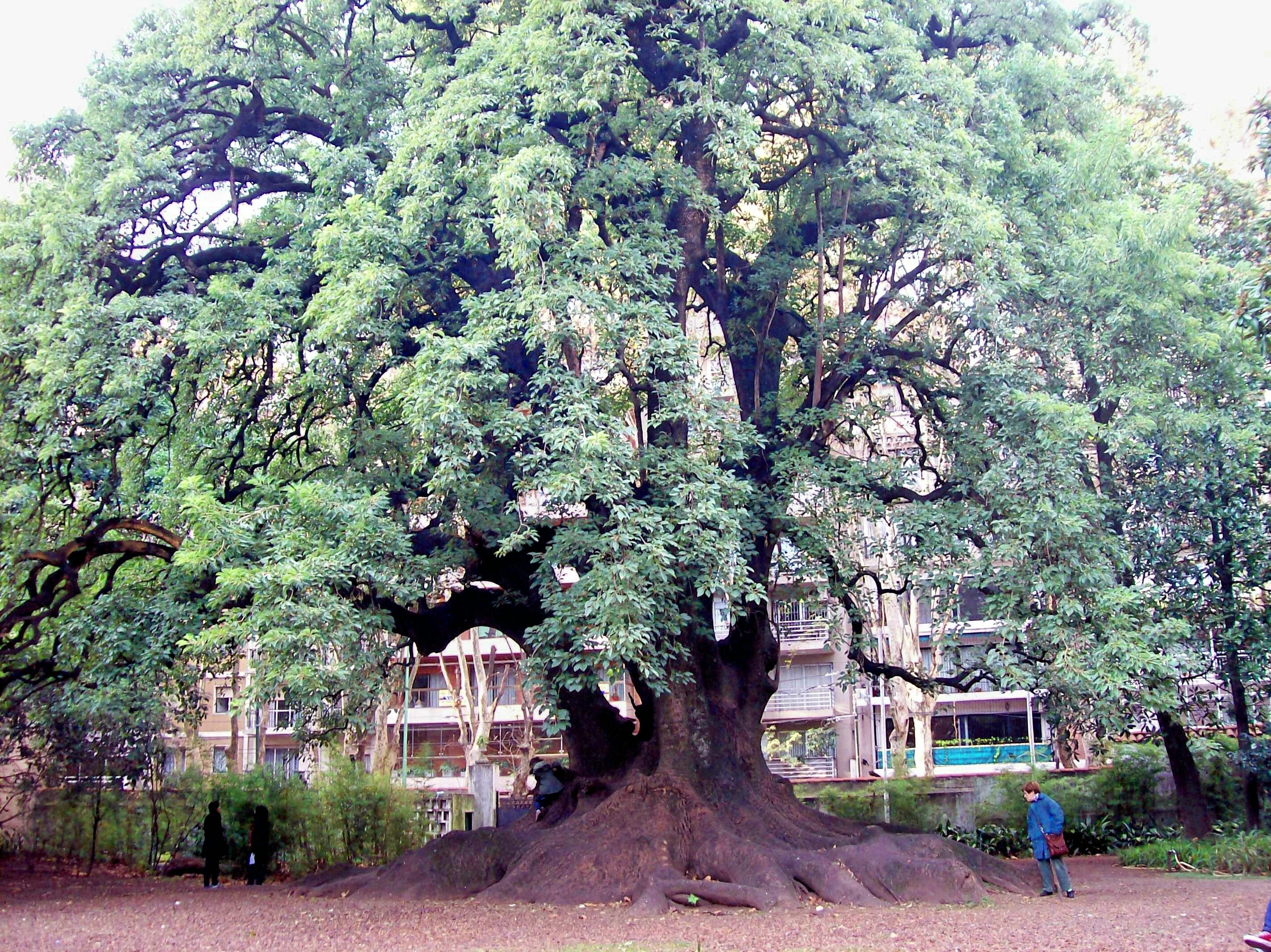

Its trunk and roots are thick enough and in some cases enough for a person to sit upon.
The traveller’s tree looks like a palm, but botanically it is not a true palm. The traveller’s tree of Madagascar, fan-shaped, has a trunk up to 30 feet tall. The foliar fan consists of 30 to 45 leaves, each as much as 36 feet in length. Their fans look majestic.
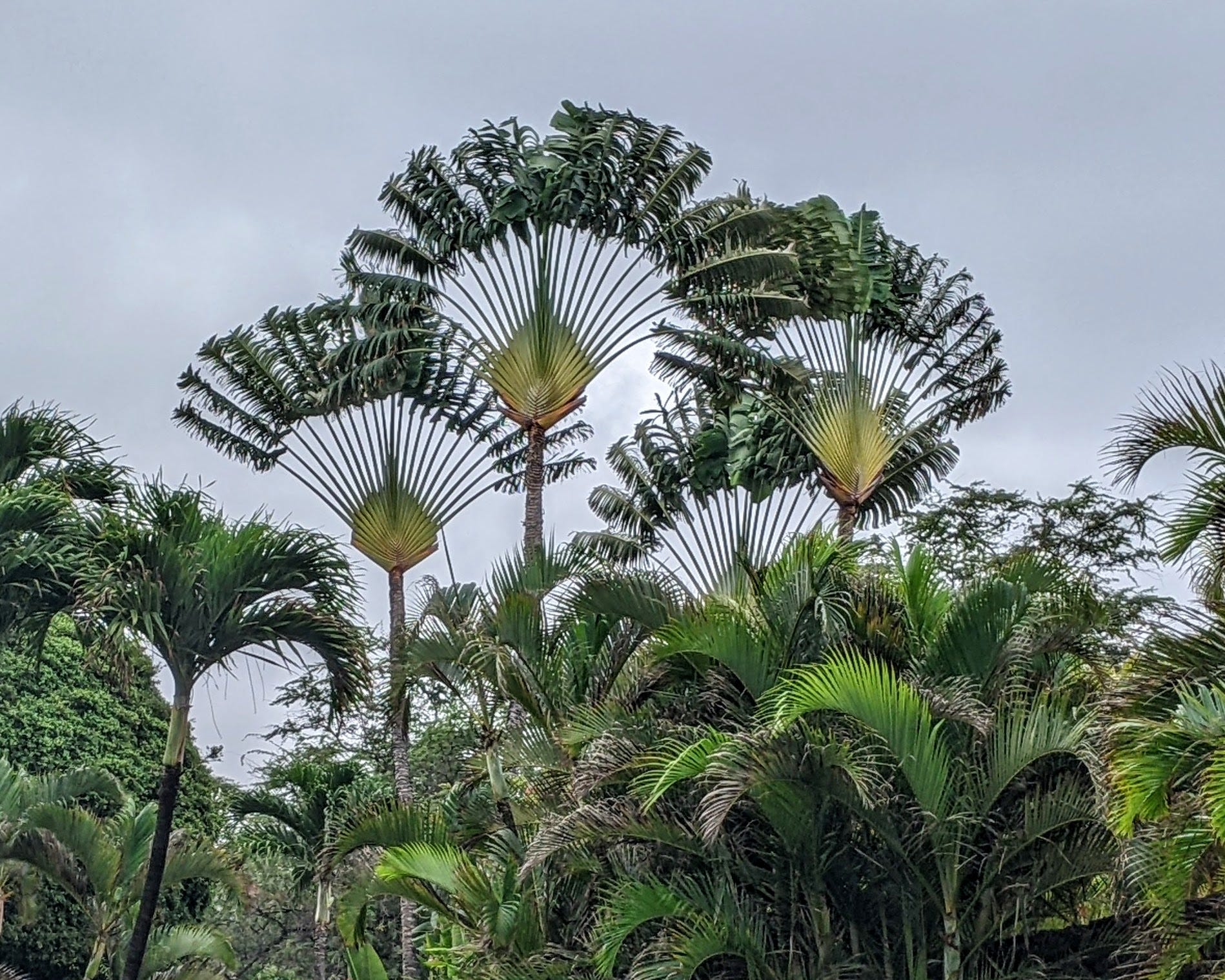

Its leaves have hollow bases from which, reportedly, travellers could get portable water. It can hold water in leaf bases to withstand dry conditions.
The talipot palm reverses the usual picture of a tree’s life: it spends decades preparing for a single, enormous flowering, and then dies. The talipot palm of tropical Asia is a surprising one. What is fascinating and surprising about this tree is that it flowers only once, often after as many as 75 years, and then dies after fruiting.
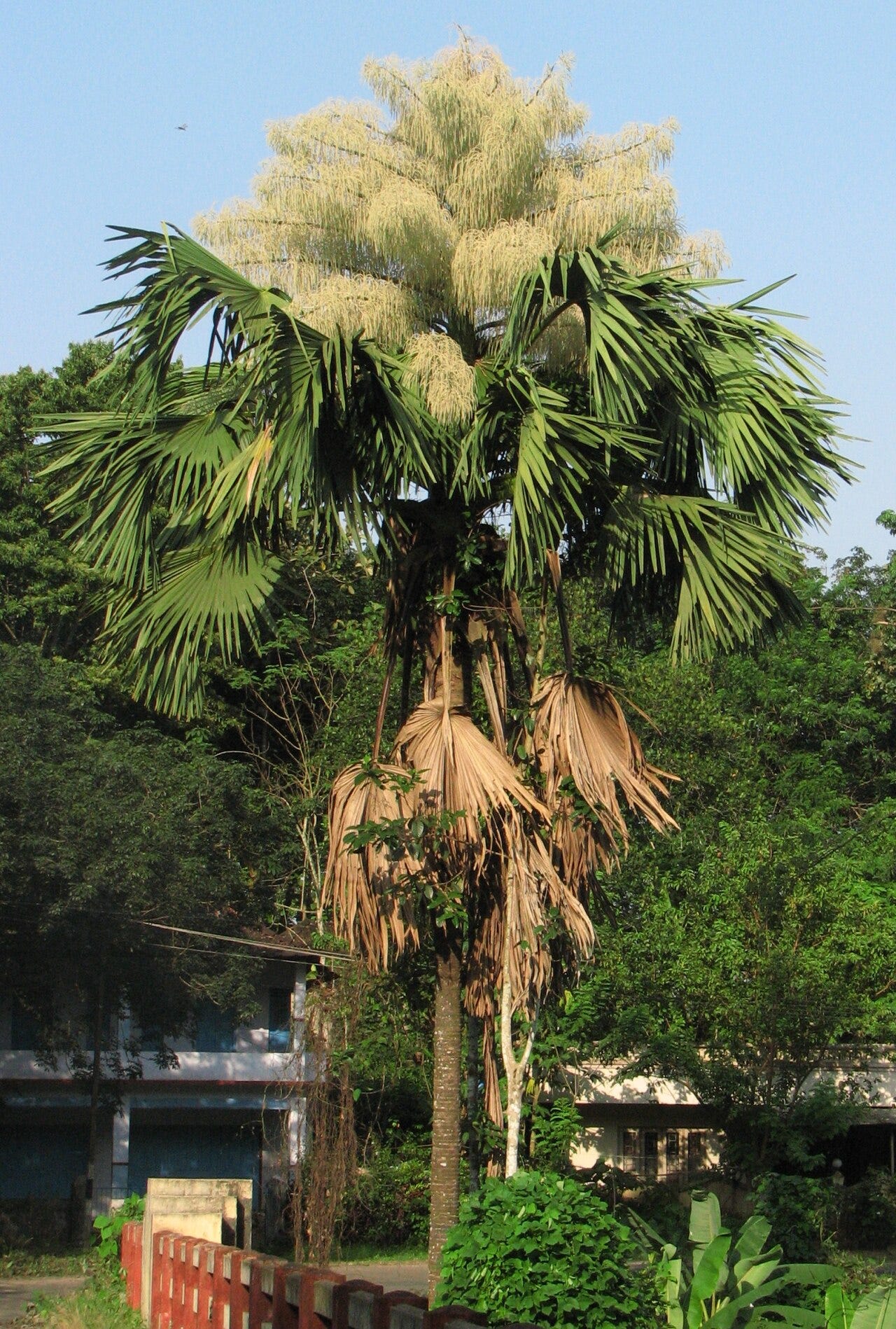

It is one of the largest palms, also fan-shaped, with leaves up to 16 feet in diameter. Its leaves have been used to write manuscripts and have also been used by healers.
The double coconut is remarkable for producing one of the most extraordinary seeds in the plant world. It grows to 25–34 m (82–112 ft) tall and has fan-shaped leaves. Its fruits take about ten years to mature, weigh 25 to 45 kilograms, and look like a pair of coconuts.
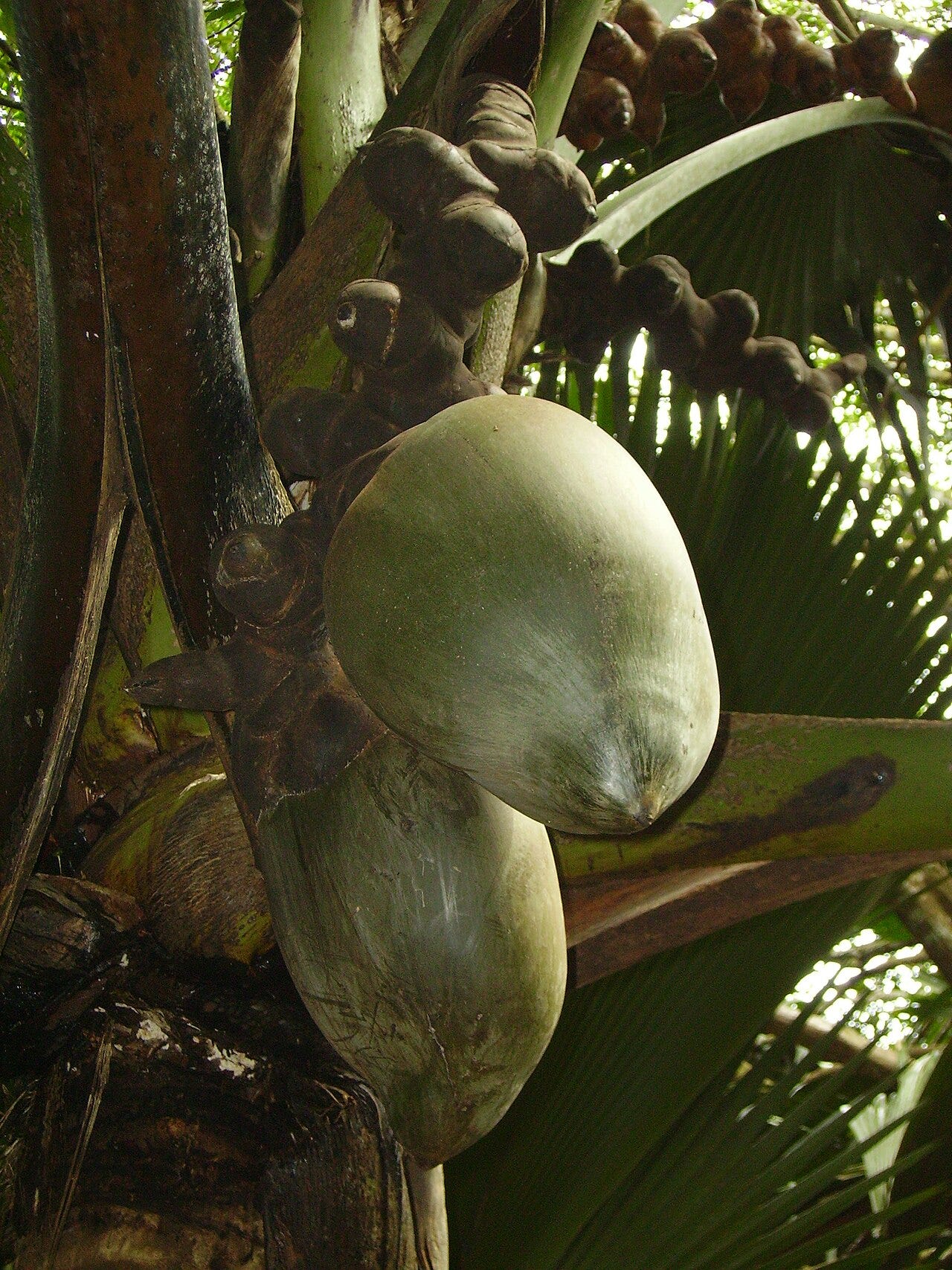

Wikipedia notes that, “The seeds of Lodoicea (double coconut) have been highly prized over the centuries; their rarity caused great interest and high prices in royal courts, and the tough outer seed coat has been used to make bowls such as for Sufi/Dervish beggar-alms kashkul bowls and other instruments.”
The coast redwood is not just among the tallest trees; it is the tallest tree species on Earth. Pacific Coast redwoods are among the tallest trees; the species reaches up to 115.9 m (380.1 ft, that is, which makes it taller than the Statue of Liberty) in height.
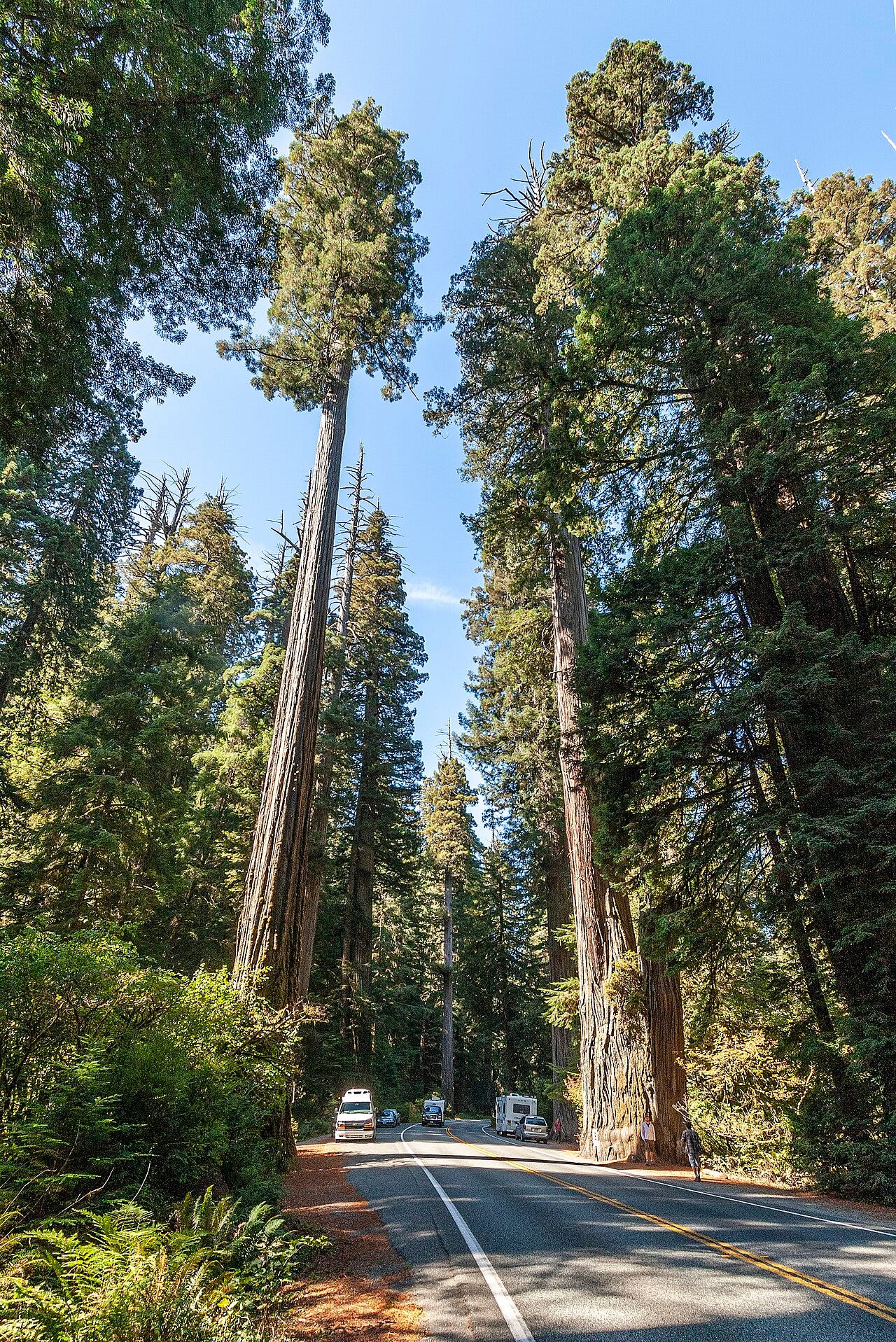

Not just the tallest but also one of the long-lived, living 1,200–2,200 years or more. This tree is found along coastal California and Oregon within the United States.
The tallest tree on Earth is a coast redwood, but the tallest flowering plant is the Australian mountain ash. Its tallest living specimen stands 100 m (328 feet) tall.
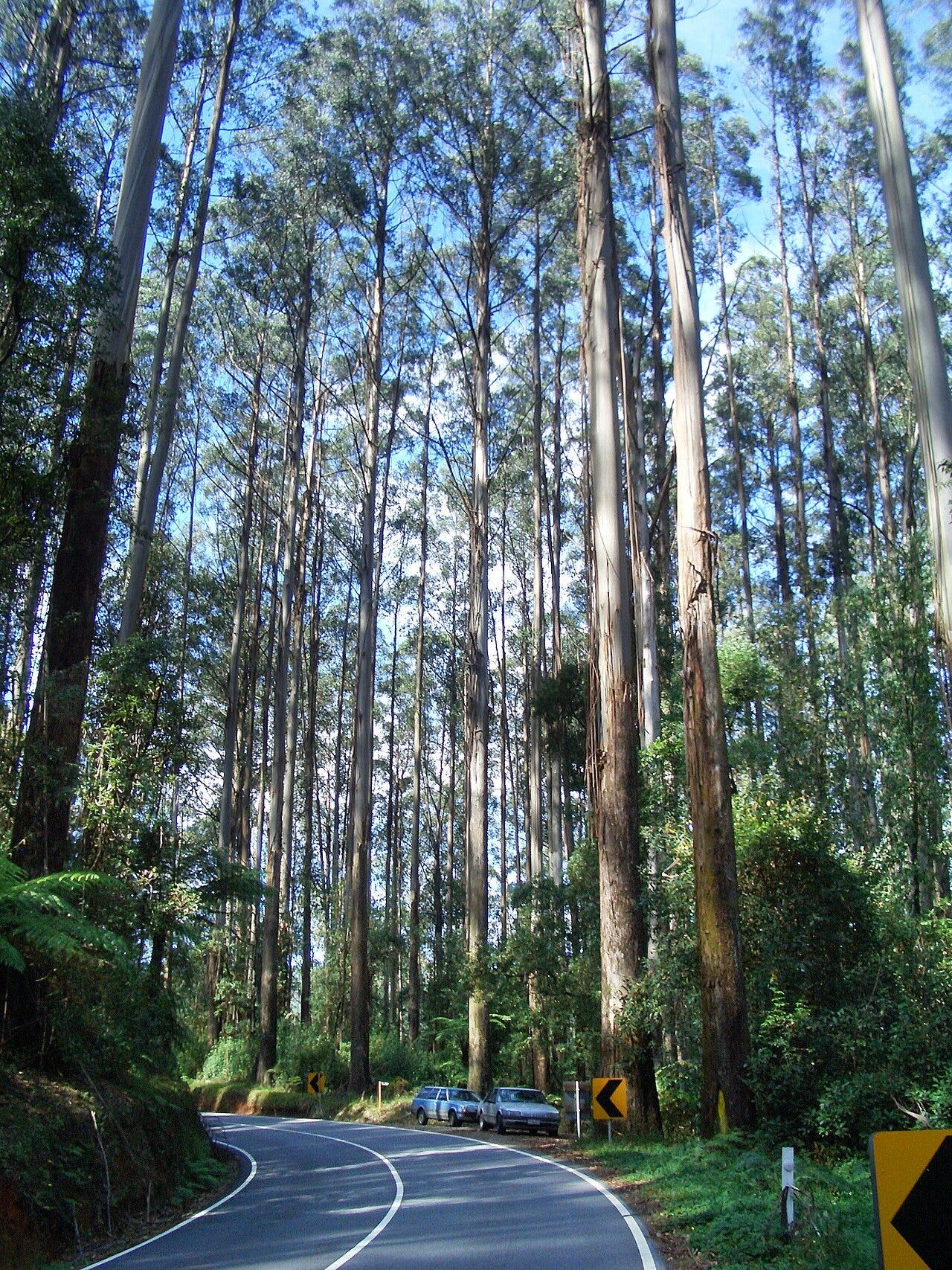

The oldest known specimen is about 500 years old. Interestingly, studies have shown that low-intensity fires can lead to the growth of younger trees without killing the parent trees. Old-growth mountain ash forests are some of the most carbon-dense forests in the world.
The oldest living tree that is still a single, individual tree is a bristlecone pine, reported to be more than 4,800 years old, in eastern California (though Wikipedia explains that the precise location is a closely guarded secret).
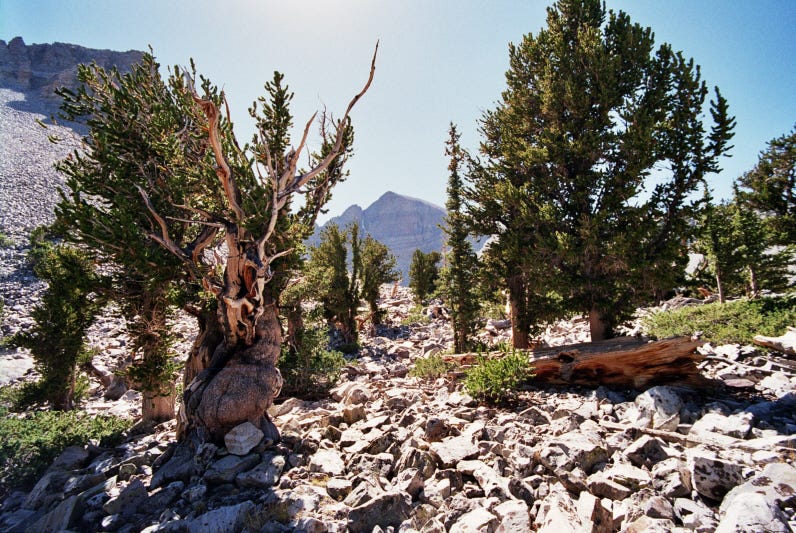

Scientists are curious why this tree lives so long. They are hard to cultivate and in gardens they fall victim to root rot. They do well in rocky soils though, areas with little rain.
Old Tjikko is old in a stranger way: the organism is ancient, even though the visible trunk is much younger.
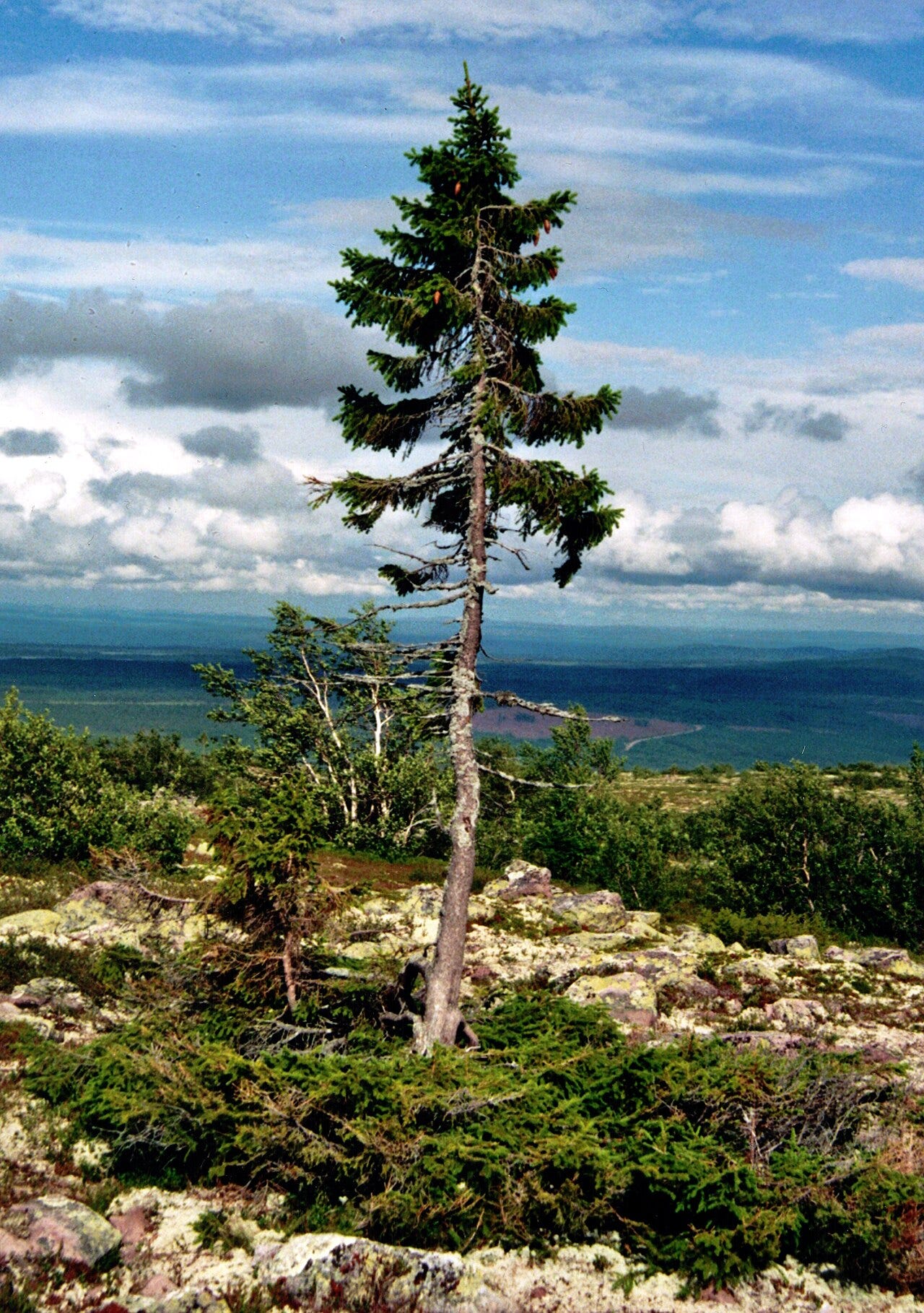

Although it is a 9,568-year-old spruce in Sweden but it’s not an individual tree that old but rather a clonal tree (a clonal tree is a group of trees that are genetically identical and connected, having grown from a single original tree) with regenerated new trunks, branches, and roots.
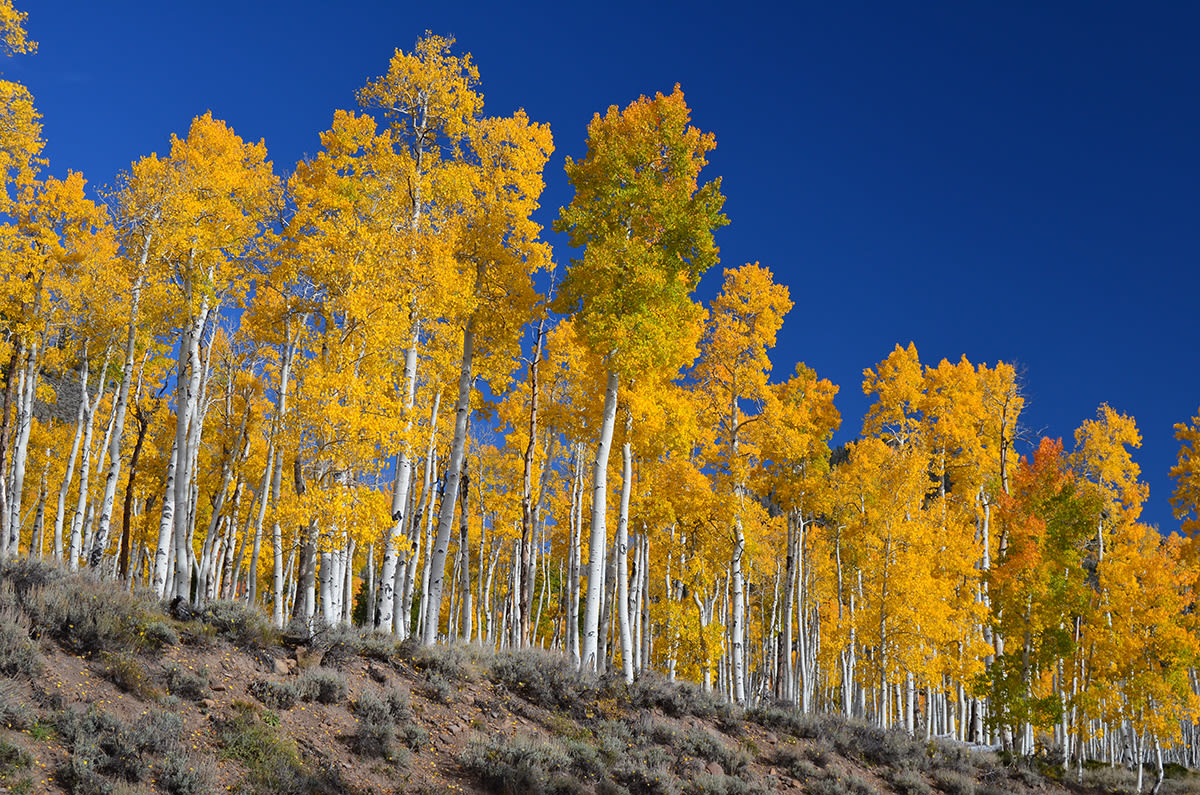
Pando looks like many separate trees, but they are all part of one enormous organism joined underground by the same roots. In other words, what appears to be a forest in the picture below could actually be a single Pando tree. For me, it is one of the most counterintuitive trees on this list.
#/media/File:FallPando02.jpg)
Wikipedia notes that, “As a multi-stem tree, Pando is the world’s largest tree by measures of weight, landmass, and species.” Pando has an estimated 47,000 stems that appear to be individual trees but are part of a single tree connected by a root system that spans 106 acres.
These are only a few words on these trees from a layman; an expert would no doubt have much richer insights into these and many other wonders of nature. Reading about trees and writing this post has inspired me to look for resources to learn more about trees. If you know of any good ones, I would be grateful for your recommendations.
References:
Encyclopaedia Britannica. Encyclopaedia Britannica, 15th edition.
Wikipedia